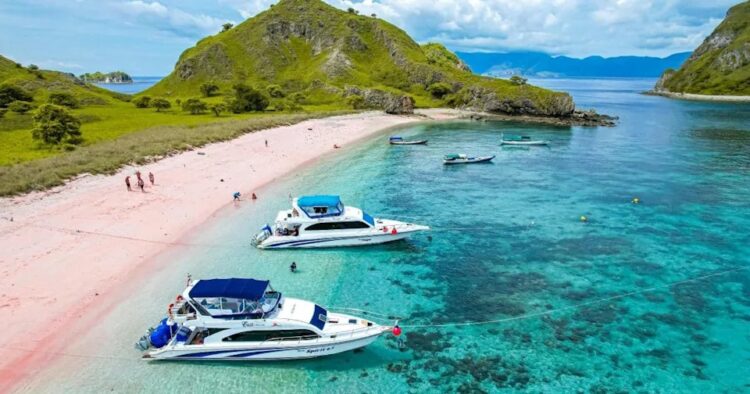
Labuan Bajo is no longer just a small fishing town on the western edge of Flores; it is now the beating heart of Indonesia’s luxury marine tourism.
The concrete answer to why it attracts yacht travelers and ocean lovers lies in one word: access.
From here, you can reach some of the most biologically diverse waters on Earth, untouched coral gardens, and the famous Komodo National Park, all within a day’s sail.
Unlike Bali or Lombok, Labuan Bajo offers the rare combination of exclusivity and authenticity: modern marinas and resorts coexist with a traditional island rhythm that has barely changed in decades.
Table of Contents
Why Labuan Bajo Became Indonesia’s Yacht Gateway
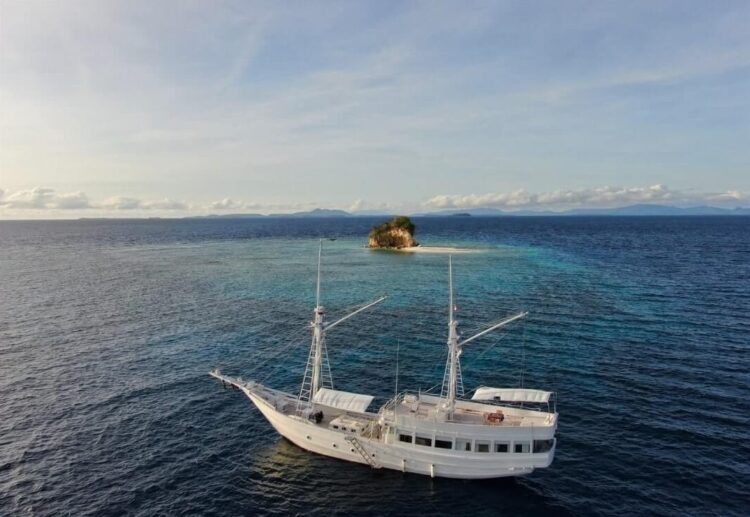
Labuan Bajo’s transformation began when the nearby Komodo National Park was recognized as a UNESCO World Heritage Site. Suddenly, the region became a global hotspot for divers and sailors. Its calm waters, short sailing distances between islands, and rich marine life made it ideal for private charters and small luxury vessels.
For yacht travelers, this means one crucial advantage: every destination, from Padar Island’s panoramic peaks to Pink Beach’s rare coral sands, is within a few nautical miles. There’s no need for long overnight passages; instead, you can drop anchor in a new paradise every morning.
The harbor now accommodates vessels from day cruisers to multi-deck yachts, with fueling, maintenance, and provisioning facilities improving yearly. The local airport (Komodo International) connects directly to Bali, Jakarta, and Surabaya, making it easy to begin or end a sailing journey here.
When to Visit Labuan Bajo by Sea
Labuan Bajo’s sailing season runs year-round, but conditions vary:
| Season | Months | Conditions | Best For |
| Dry Season | April – October | Calm seas, clear skies, 30°C average | Diving, snorkeling, and sailing between islands |
| Transition Period | November | Light rain, fewer tourists | Good for quieter charters |
| Wet Season | December – March | Occasional storms, lush scenery | Photography, short coastal trips |
The dry season is ideal for smooth navigation and visibility underwater. Divers and freedivers find this period unmatched, with manta rays, reef sharks, and turtles commonly spotted. However, for photographers, the rainy months paint the islands in deep greens and the skies in dramatic hues.
Setting Sail: Routes and Experiences
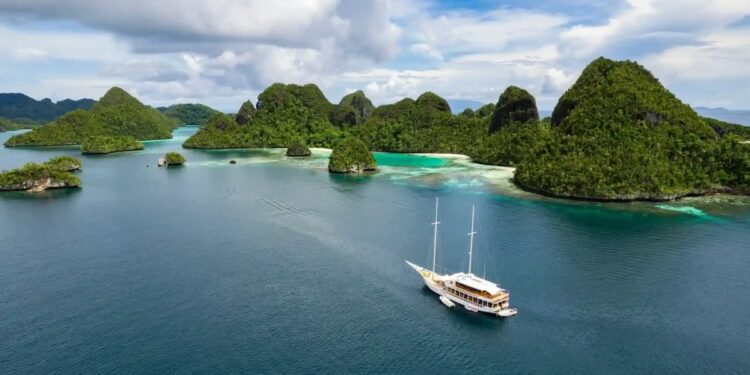
Labuan Bajo’s sailing circuit revolves around the Komodo archipelago, a group of rugged volcanic islands surrounded by turquoise shallows and deep drop-offs. Most itineraries follow a loop through the park, visiting these key locations:
- Kelor Island – Perfect for a short climb and sweeping views of the Flores Sea.
- Rinca Island – One of the main homes of the Komodo dragon; rangers guide walks through its dry savanna.
- Padar Island – Famous for its three-colored beaches and sunrise viewpoint.
- Pink Beach – A surreal stretch of rose-tinted sand created by red coral fragments.
- Manta Point – A drift-snorkeling site where manta rays glide gracefully through strong currents.
- Kanawa and Sebayur Islands – Calm anchorages ideal for sunset barbecues and night dives.
For travelers seeking flexibility, private charters allow you to stay longer at quieter spots like Gili Lawa Darat or Siaba Besar.
This is where a yacht charter Labuan Bajo service becomes invaluable, offering the freedom to design your own route, timing, and onboard comfort level without relying on fixed group schedules
These charters typically include crew, chef, dive guide, and water sports equipment, making the experience seamless yet deeply personal.
Diving and Marine Life
Labuan Bajo sits at the meeting point of two major ocean currents, the Pacific and Indian, creating one of the richest marine ecosystems on the planet. The waters here hold over 1,000 species of fish and 260 types of coral.
Top dive sites:
| Dive Site | Depth | Highlights |
| Batu Bolong | 5–35 m | Walls covered in coral, anthias, and turtles |
| Castle Rock | 10–40 m | Sharks, trevallies, schooling barracuda |
| Crystal Rock | 5–30 m | Clear visibility, soft coral gardens |
| Mawan Island | 5–25 m | Frequent manta ray encounters |
| Siaba Besar | 3–15 m | Gentle currents, great for beginners |
Even snorkelers can see extraordinary marine life, reef sharks, parrotfish, and giant clams appear just meters from the surface.
Life Aboard: What to Expect on a Yacht Charter
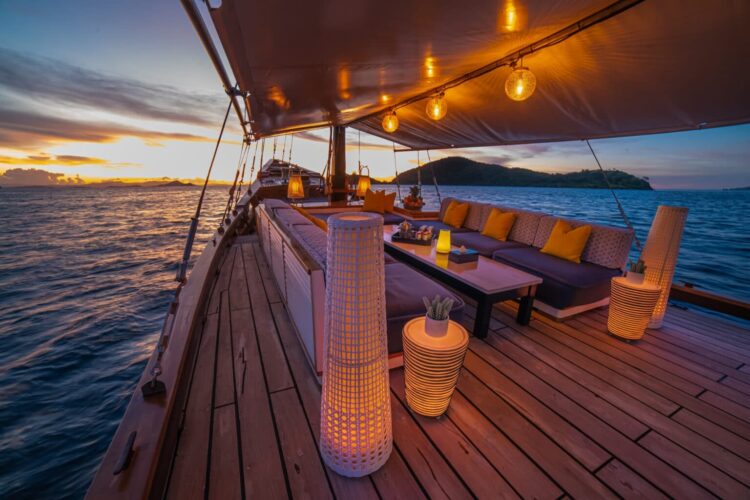
A chartered yacht in Labuan Bajo is both transport and accommodation. Most boats range from 20 to 40 meters and feature ensuite cabins, open decks, and shaded lounges.
Meals often highlight local ingredients, grilled fish, sambal matah, and tropical fruit, prepared fresh daily by onboard chefs.
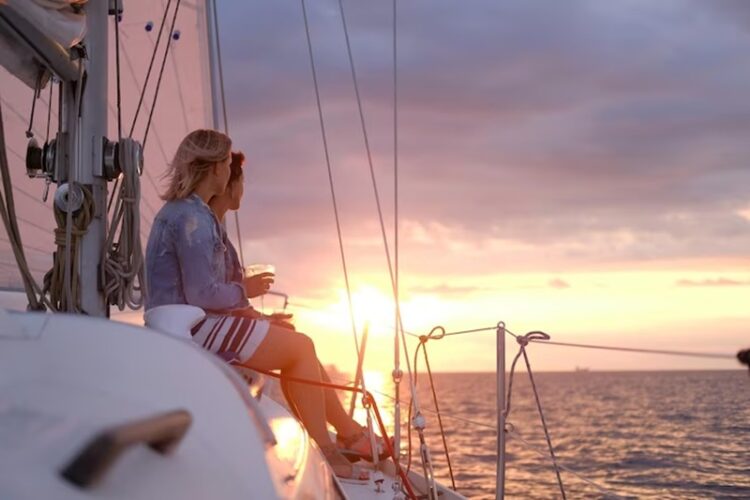
Unlike resort stays, living on a yacht connects you directly to the rhythm of the ocean. Each morning begins with the sound of waves and ends with the sun setting behind volcanic silhouettes.
You can wake up anchored off a secluded island, swim before breakfast, and dive by mid-morning, all without ever packing a bag or changing hotels.
Local Culture and Onshore Excursions
Beyond the water, Labuan Bajo’s charm extends inland. The town itself has grown into a relaxed hub of cafés, dive shops, and small boutique hotels. But a short drive or boat ride reveals traditional villages where ancient customs persist.
- Melo Village offers cultural performances, including the Caci whip dance, a symbol of Manggarai identity.
- Cunca Wulang Waterfall provides a refreshing freshwater contrast to the salt and sun.
- Spider Rice Fields in Ruteng (about two hours away) show the traditional lingko pattern, rice terraces shaped like a spider web, unique to Flores.
Many yacht travelers end or begin their trip with a night in Labuan Bajo to enjoy the hilltop restaurants overlooking the bay, serving grilled seafood and local coffee.
Environmental Responsibility
Sailing through the Komodo region comes with responsibility. The National Park enforces strict anchoring, waste disposal, and wildlife interaction rules. For example, engines must be turned off near manta cleaning stations, and drones are restricted in certain areas to prevent disturbing wildlife.
Sustainable tourism operators now use solar-powered systems on board and avoid single-use plastics. Some also partner with local NGOs for coral restoration and beach cleanups. Travelers are encouraged to bring reef-safe sunscreen and reusable water bottles.
How to Plan Your Yacht Trip
Planning a yacht journey in Labuan Bajo requires balancing logistics with adventure. Here’s what to consider before you go:
| Step | Details |
| 1. Choose Your Vessel | Options range from traditional phinisi wooden schooners to modern catamarans. |
| 2. Book in Advance | April to October fills up quickly; reserve at least two months ahead. |
| 3. Check Permits | The Komodo Park entry fee and diving permits are usually handled by the operator. |
| 4. Pack Light | Bring reef shoes, a light jacket for evenings, and dry bags for shore trips. |
| 5. Respect the Ocean | Follow park guidelines and never feed or touch marine animals. |
Travel insurance that includes sea travel is also advisable.
The Concrete Middle: Why Labuan Bajo Is Perfect for Ocean Lovers
The definitive reason ocean lovers gravitate toward Labuan Bajo is the variety packed into a small radius. In one sailing day, you can explore coral walls, pink beaches, volcanic peaks, and traditional villages, all framed by some of Indonesia’s clearest waters.
For yacht travelers, it is a rare place where nature and comfort intersect without compromise.
You can dive with mantas before lunch, dine under the stars, and wake up to dolphins at the bow.
This concentration of natural beauty and accessible marine diversity makes Labuan Bajo not just a stopover, but a destination in itself, a place where the sea defines the rhythm of every day.
Final Thoughts

Labuan Bajo represents what many yacht destinations try to achieve: seamless access to nature, authentic local culture, and a touch of quiet luxury. It is both the gateway to Komodo and a world apart from crowded tourist hubs.
Whether you are chasing manta rays, photographing volcanic sunsets, or sailing between coral islands, this corner of Indonesia offers an unmatched maritime experience. For yacht travelers, it is not simply another harbor; it is the starting point of the voyage of a lifetime.