
Zurich, Munich, and Hamburg have several traits that make premium companionship markets unusually viable: wealthy local populations, international business traffic, luxury hospitality, large numbers of short-stay visitors, and legal frameworks that allow adult commercial sex under regulated conditions.
No official European database ranks cities by “elite companionship,” and the term itself has no legal or statistical definition. Reliable figures rarely separate independent escorts, agencies, lower-cost services, and premium companionship.
Still, economic and tourism data help explain why the same cities repeatedly appear around the higher end of the market.
A visitor arriving for a banking meeting in Zurich, an industrial conference in Munich, or a trade event in Hamburg enters a city built around people with money, limited free time, and expectations of privacy. That combination matters.
Table of Contents
Affluence Creates the Economic Base

Premium companionship depends partly on disposable income. Zurich, Munich, and Hamburg each have unusually strong economic foundations, although their sources of wealth differ.
Zurich is the clearest example. A 2025/2026 study commissioned by the city and canton describes Zurich as Switzerland’s dominant financial centre.
The regional financial sector generated CHF 32.8 billion in gross value added and supported about 103,400 full-time-equivalent jobs in 2023. Roughly two-thirds of financial-sector employment was concentrated in the city itself, according to the Zurich financial-centre study.
Banking, insurance, private equity, asset management, professional services, and multinational companies create a large population of highly paid residents and visiting professionals.
Munich reaches a similar result through a different economic mix. The Bavarian capital combines technology, engineering, automotive businesses, finance, media, and corporate headquarters. Official city statistics list GDP per inhabitant at €92,347 for 2022, alongside more recent indicators showing a large and active business economy.
Hamburg adds shipping, logistics, aviation, media, commerce, and professional services. Its role as a port city also gives the local nightlife economy unusually deep historical roots.
For premium companionship, affluent cities create room for services where discretion, schedule flexibility, presentation, conversation, and social confidence can command higher prices.
Business Travel Keeps Demand Moving

A prosperous resident population helps, yet visitors are especially important because they constantly replenish the potential customer base.
Zurich’s tourism region recorded a record 7.56 million hotel nights in 2025. Zurich Tourism continues to identify meetings, incentives, conferences, and exhibitions as a strategic segment, noting the relatively high economic value associated with business travellers in its 2025 tourism review.
A business visitor creates a particular urban pattern. Meetings may end at 18:00, a flight may leave the following morning, and a high-end hotel sits a few minutes from restaurants and nightlife. Such visitors generally have little interest in building a conventional local social circle during a 36-hour trip.
Munich operates on a much larger tourism scale. The city registered 9.3 million hotel guests and 19.7 million overnight stays in 2025. Major fairs including BAU, Bauma, Intersolar, IAA Mobility and Drinktec helped generate substantial visitor flows, according to the city’s 2025 tourism results.
Hamburg recorded 16.5 million overnight stays in 2025, while its government reports continued growth in meetings and congress activity alongside leisure and cruise tourism in its latest tourism assessment.
Large events create temporary populations with unusually high concentrations of professionals, executives, exhibitors, investors, performers, and international visitors. Service businesses of many kinds respond to that rhythm.
Each City Developed a Different Companion Market
Shared economics explain part of the pattern. Local culture explains why the three markets still feel quite different.
Zurich: discretion fits the city
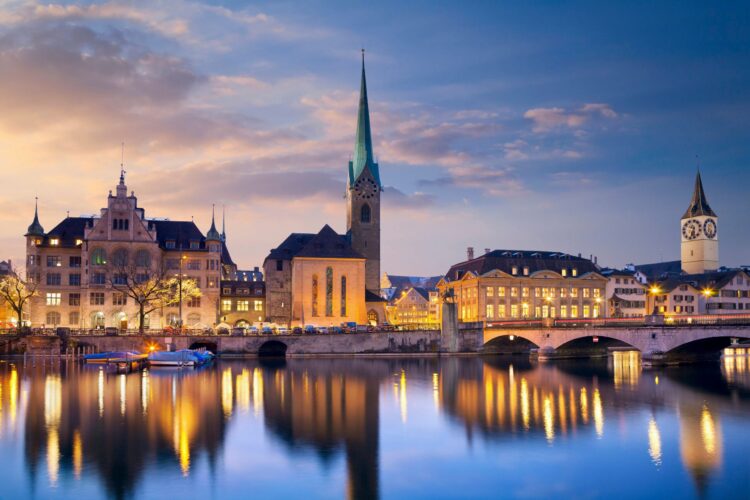
Zurich’s image revolves around finance, privacy, quality hospitality, and a relatively understated version of wealth. Premium companionship fits naturally into an environment where clients may value confidentiality and polished social interaction.
The regulatory environment is visible as well. Zurich has a specific municipal ordinance governing prostitution, including salon and street activity. Brothels generally require authorisation, while street prostitution is restricted to designated areas and hours under the city’s prostitution regulations.
Formal rules can indirectly favour appointment-based and discreet segments because the market operates within a defined administrative structure.
Munich: money meets major events
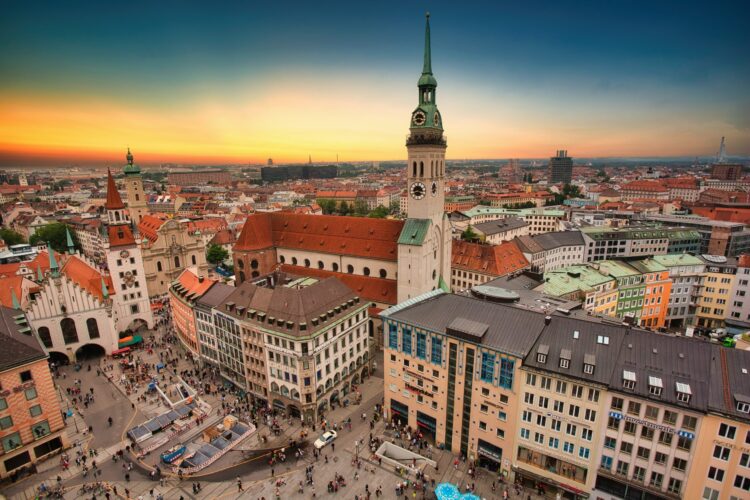
Munich’s companionship economy sits beside a city calendar packed with trade fairs, corporate travel, football, cultural events, and Oktoberfest.
A major exhibition can fill hotels with visitors whose schedules revolve around meetings, dinners, and evening networking. Such peaks create demand across hospitality, restaurants, private transport, nightlife, and adult services.
Local regulation is comparatively restrictive geographically. That regulatory backdrop also shapes how services commonly marketed online under terms such as ‘escort München’ operate within the city.
People working in prostitution must register under German federal rules, while Munich also maintains extensive restricted zones.
Public solicitation is generally prohibited, and within designated restricted areas the prohibition can extend to private premises, including hotel rooms, according to Munich’s official guidance.
As a result, legal geography matters considerably more than a visitor might assume.
Hamburg: a centuries-old nightlife infrastructure
Hamburg has the strongest historical connection between commerce, travel, nightlife, and commercial sex.
The Reeperbahn began as an area associated with rope makers serving Hamburg’s maritime economy. Taverns and lodging followed.
By around 1900, theatres, drinking establishments, entertainment venues, and brothels had transformed the district into a major nightlife centre. Hamburg is marking the street’s 400-year history in 2026, as described in the city’s Reeperbahn history.
Modern premium companionship is quite different from the traditional red-light economy of St. Pauli, yet both developed within a city accustomed to international visitors and late-night commerce.
Regulation Helps Explain the Market’s Structure

Germany’s legal framework has changed significantly since the Prostitutes Protection Act took effect in July 2017. Sex workers are subject to registration and health-counselling requirements, while prostitution businesses generally require permits under the federal protection law.
The latest headline count published by Germany’s Federal Statistical Office records around 32,300 valid registrations at the end of 2024.
Officials explicitly warn that the figure excludes unregistered workers, meaning it cannot be treated as a complete estimate of the country’s sex-work population. The Destatis prostitution statistics therefore provide a useful administrative measure rather than a full market count.
Hamburg adds local restrictions. German law permits adults to offer and purchase sexual services, while Hamburg prohibits prostitution or solicitation in specified areas and imposes additional rules around St. Pauli and St. Georg. The city’s guidance for customers also explains the federal condom requirement.
Switzerland follows another model, combining federal criminal law with substantial cantonal and municipal regulation. Zurich therefore has its own licensing and zoning system.
Legal status should never be confused with an absence of risk. Coercion, exploitation, trafficking, and commercial sexual activity involving minors remain criminal matters.
Swiss federal police, for example, identifies trafficking for sexual exploitation as a criminal offence under Article 182 of the Swiss Criminal Code in its human-trafficking legal guidance.
Digital Platforms Changed What a “Hotspot” Looks Like

An older red-light district could be identified by streets, neon signs, clubs, and taxis arriving after midnight. Premium companionship increasingly has a much smaller physical footprint.
Online discovery allows independent providers and agencies to reach clients before either party enters the same neighbourhood. A 2025 IZA economic paper argues that digital sexual markets can reduce participation costs and expand market access, highlighting the wider effect of technology on commercial intimacy.
For Zurich, Munich, and Hamburg, location therefore operates at city scale. International airports, hotels, conferences, wealthy residents, dining, nightlife, and digital communication can support a market without creating a clearly identifiable “elite escort district.”
That shift also explains why measuring the sector is difficult. Government statistics usually count registrations or licensed businesses. They rarely record service positioning, customer spending, companionship style, or whether a provider would describe their work as premium.
Why the Same Three Cities Keep Appearing
Zurich, Munich, and Hamburg developed strong markets for premium companionship because several favourable conditions overlap in each place.
Money supplies purchasing power. International companies and major events generate a steady flow of temporary visitors. Luxury hotels and mature hospitality industries provide the surrounding infrastructure.
Digital platforms allow discreet connections across an entire metropolitan area. Regulation gives commercial sex a formal legal framework while placing important limits on where and how activity may occur.
No reliable evidence proves that the three cities form Europe’s definitive top tier for elite companionship. Claims of that kind generally come from industry marketing rather than official statistics.
A more defensible conclusion is also more interesting: Zurich, Munich, and Hamburg possess many of the urban conditions that allow a high-end companionship market to emerge and persist. Their stories show how wealth, mobility, regulation, technology, and city culture can quietly shape intimate service economies.