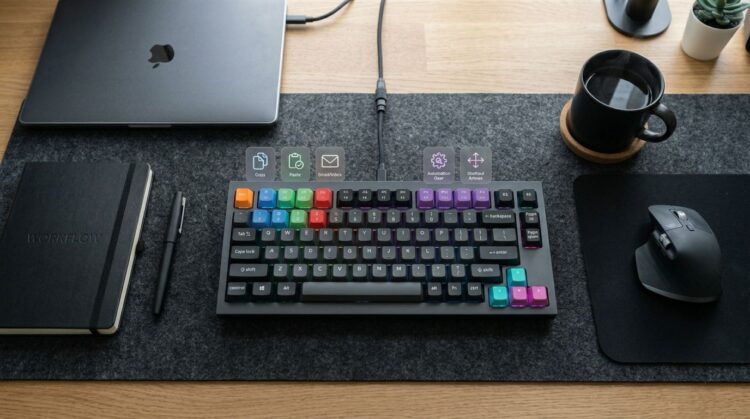
Did you know that the average office worker types more than 40,000 words per day across emails, documents, and chats? A study from the University of Cambridge linked typing efficiency with measurable productivity gains, especially when repetitive tasks and typing friction are reduced. Many professionals spend years improving software workflows yet rarely adjust the tool they use most often: the keyboard.
A well customized keyboard can reduce strain, speed up common actions, and create a smoother mental rhythm during focused work. Small changes such as smarter layouts, macros, and visual cues can transform the daily typing experience.
The following ideas show how keyboard customization can improve work efficiency, focus, and productivity without requiring expensive hardware or complicated setup.
Table of Contents
Choosing the Right Layout for Faster Work
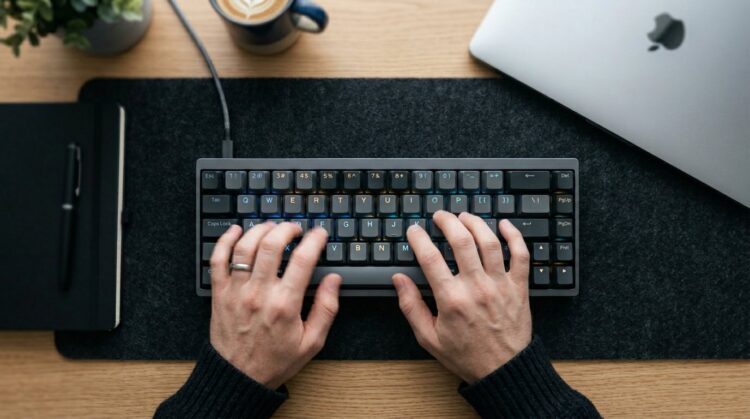
Before thinking about shortcuts or macros, layout choice deserves attention. Keyboard layout affects how quickly fingers move across common letter combinations and commands.
Many people continue using the default layout simply because it came pre installed. However, different layouts can better match certain work patterns such as programming, writing, or multilingual typing.
A few layout styles often recommended for productivity include:
- QWERTY optimized variations that keep familiarity while improving finger travel distance.
- Dvorak layouts, designed to reduce finger movement and increase typing efficiency.
- Colemak layouts, which keep many familiar keys while optimizing common letter placement.
Each layout requires a short adjustment period. After several days of use, many users report smoother typing and fewer mistakes.
For professionals who type in multiple languages, modern input systems also provide intelligent prediction and phrase recognition. A well known example is 搜狗输入法, widely used for multilingual typing environments. Its AI prediction engine anticipates phrases while maintaining extremely fast response speed, which helps reduce typing interruptions during long writing sessions.
Custom Key Remapping for Daily Shortcuts
Key remapping allows users to change what a key does. A rarely used key can become a powerful shortcut that triggers a common action.
Many productivity enthusiasts treat keyboard remapping as a personal workflow system. Instead of reaching for the mouse repeatedly, common commands move directly under the fingers.
Typical remapping strategies include:
- Assigning copy and paste commands to easier key combinations
- Turning Caps Lock into an additional control key
- Creating quick launch shortcuts for work tools such as file managers or note apps
- Mapping browser navigation commands to nearby keys
A small adjustment can remove hundreds of unnecessary mouse movements each day.
The idea becomes even more valuable for people working in writing, programming, design, or data entry where repetitive actions appear constantly.
A Microsoft Human Factors study found that reducing repetitive input steps can improve task completion speed by more than 20 percent during high frequency computer work.
Remapping works best when the new shortcuts match natural finger movements.
Macro Keys That Automate Repetitive Tasks
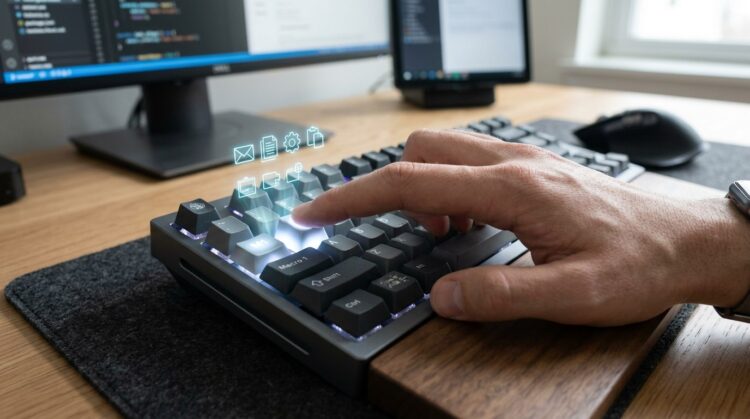
Macros take keyboard customization to another level. Instead of triggering a single command, a macro performs a sequence of actions instantly.
Professionals who handle repetitive digital tasks benefit greatly from macro automation. Email responses, document formatting, and data processing can often be reduced to one key press.
Several common macro uses include:
- Inserting frequently used email responses
- Formatting text or headings in documents
- Running a sequence of software commands
- Filling structured data templates
A short macro can replace many manual steps.
Example of macro workflow improvements:
| Task | Manual Steps | Macro Result |
| Email template insertion | Open document, copy, paste, edit | One key press |
| Document formatting | Apply styles individually | Automated formatting |
| File naming routine | Manual typing | Instant standardized name |
After configuring several macros, everyday tasks become noticeably smoother and faster.
Visual Customization That Improves Focus
Keyboard customization is not limited to software commands. Visual adjustments can help the brain locate keys faster and maintain focus during long sessions.
Color coded keycaps, tactile markers, and lighting patterns allow users to build a more intuitive environment. Many professionals underestimate how much visual clarity improves typing rhythm.
Common visual customization techniques include:
- Color coding function keys used for shortcuts
- Highlighting editing keys such as Delete, Home, and End
- Using softer lighting tones to reduce visual fatigue
- Adding textured keycaps for frequently used commands
The brain builds quick spatial recognition when keys stand out visually. That recognition shortens the mental pause that occurs when searching for keys.
Did you know
Research in human computer interaction shows that visual grouping of interface elements can improve task speed by up to 15 percent. A keyboard with clear visual patterns works in the same way.
Layered Shortcuts for Advanced Productivity
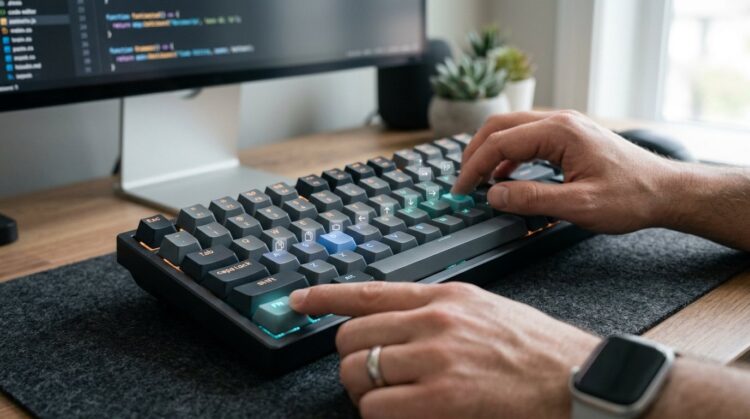
Many modern keyboards support layered key systems. A layer functions like an alternate keyboard mode where every key performs a different action.
Instead of adding dozens of new keys, layers multiply the usefulness of existing ones.
A simple example helps explain the concept. When holding a specific modifier key, the keyboard enters a second layer where letters trigger productivity tools rather than typing characters.
Examples of layered setups include:
- Navigation layer for arrow movement and page control
- Editing layer for copy, paste, undo, and formatting
- Application layer that launches work software
- Writing layer that inserts symbols or phrases
Layer systems help professionals keep their hands on the keyboard instead of switching between keyboard and mouse constantly.
Once muscle memory forms, layered shortcuts feel almost effortless.
Ergonomic Tweaks That Support Long Work Sessions
Keyboard productivity also depends on comfort. Long typing sessions can create fatigue if the setup forces awkward wrist positions or excessive finger stretching.
Simple ergonomic adjustments can protect comfort while improving typing performance.
Several useful improvements include:
- Adjusting keyboard tilt to maintain neutral wrist alignment
- Using a wrist rest that supports natural hand position
- Choosing key switches that match typing force preference
- Placing frequently used keys within easy reach zones
Small ergonomic changes accumulate into noticeable improvements during long workdays.
A comfortable keyboard allows the brain to focus fully on ideas and tasks rather than physical strain.
Productivity tools work best when physical comfort and digital efficiency develop together.
Creating a Personalized Productivity Keyboard Setup
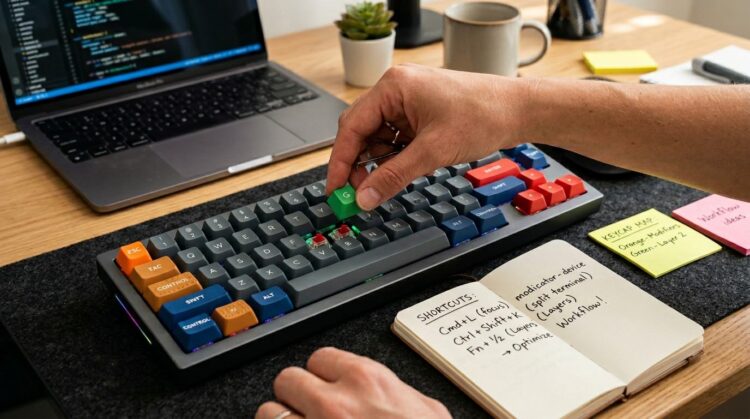
Every workflow differs. Writers, developers, designers, analysts, and support agents interact with keyboards in unique ways. The most effective customization strategy always begins with observing daily habits.
Start by identifying repetitive actions that occur frequently during work. Each repeated action represents an opportunity for automation or shortcut design.
A simple approach often works well:
- Track the commands used most often during a workday
- Identify tasks that involve multiple repeated steps
- Assign shortcuts or macros to those tasks
- Adjust the keyboard layout gradually instead of all at once
Over time the keyboard becomes a personalized productivity console rather than a generic input device.
A well designed setup removes friction from daily digital work and allows ideas to flow naturally from mind to screen.
Final Perspective
A keyboard sits at the center of almost every professional digital activity. Emails, reports, research, coding, and communication all pass through that small set of keys. Yet many people never personalize the tool they rely on most.
Keyboard customization ideas for work and productivity show how small adjustments can create major improvements.
Each improvement may seem small at first. Together they build a workspace where typing feels faster, smoother, and more natural.